
Where the Heck is my Bobbin!!
The One Thing Every Fly Tyer Loses More Than Time
We’ve all stood over the bench hunting for that one material we swore we had—only to find it buried under a pile of half-finished flies. My custom fly tying business was growing, and so was the time I wasted digging through what I used to call my “organized chaos.” The culprit wasn’t mystery theft; it was habit: not putting tools away, shoving supplies into random drawers, or never unpacking them properly after a trip.
Why a Little Organization Pays Off
A small investment of time up front saves hours later. When your hooks, beads, threads, and feathers are sorted and labeled, tying becomes faster, less stressful, and more enjoyable. Below are the practical storage solutions that rescued my workflow and will help you spend more time tying and less time searching.
Hook and Bead Boxes
Why they matter: Almost every fly starts with a hook and a head. Keeping those base components organized is the biggest time-saver.
How I use them: I group hooks by type—nymphs, dry flies, bass/saltwater—and keep bead heads, cone heads, lead eyes, and specialty heads in separate boxes. Choose boxes with tight-locking lids and dividers so small hooks don’t migrate between compartments.
Pro tip: Label each box and compartment so you can grab exactly what you need at a glance.
Thread Rack
Why it matters: Thread is one of those things you reach for constantly. A visible, accessible rack keeps colors and sizes in plain sight.
How I use it: I use a dedicated thread rack that holds spools upright and doubles as storage for other spooled materials. It keeps my bench tidy and speeds up color selection.
Tubes With Removable Ends
Why they matter: Long, loose materials like krystal flash and flashabou tangle easily if left loose.
How I use them: Removable-end tubes are perfect for storing flash, ostrich, peacock, and pheasant tails. I keep a flash-sized tube for my shimmering materials and separate tubes for larger feathers.
Ziploc Bags
Why they matter: Simple, cheap, and effective for grouping like materials.
How I use them: I keep similar items together in Ziploc bags—marabou in one bag, CDC in another—often leaving them in their original packaging inside the bag. This compresses storage and makes it easy to grab a single bag for a project.
Totes and Drawers
Why they matter: Bulkier items—pelts, deer hair, foam, and larger synthetic materials—need bigger containers.
How I use them: I store original bags inside larger Rubbermaid totes or wooden drawers. Each tote holds a category: zonkers and small fur strips; small feather packs; large pelts; synthetic body materials; foam and accents; dubbing and popper bodies. Everything is bagged individually, then grouped by type.
Pro tip: Clear drawers or labeled totes make inventory checks painless.
Quick Setup Checklist
Group like items together (hooks, beads, feathers, synthetics).
Label everything—boxes, compartments, and bags.
Use vertical storage for thread and spooled materials.
Bag small items and store them in larger containers for protection and compression.
Adopt a one-minute cleanup rule: put tools and materials away after each session.
Get Started Today
Yes, organizing takes time at first. Tackle it in small steps—one drawer or one category at a time—and you’ll notice immediate benefits. Your tying will be faster, more fun, and far less frustrating.
Happy tying.
Fly Design and Materials Selection
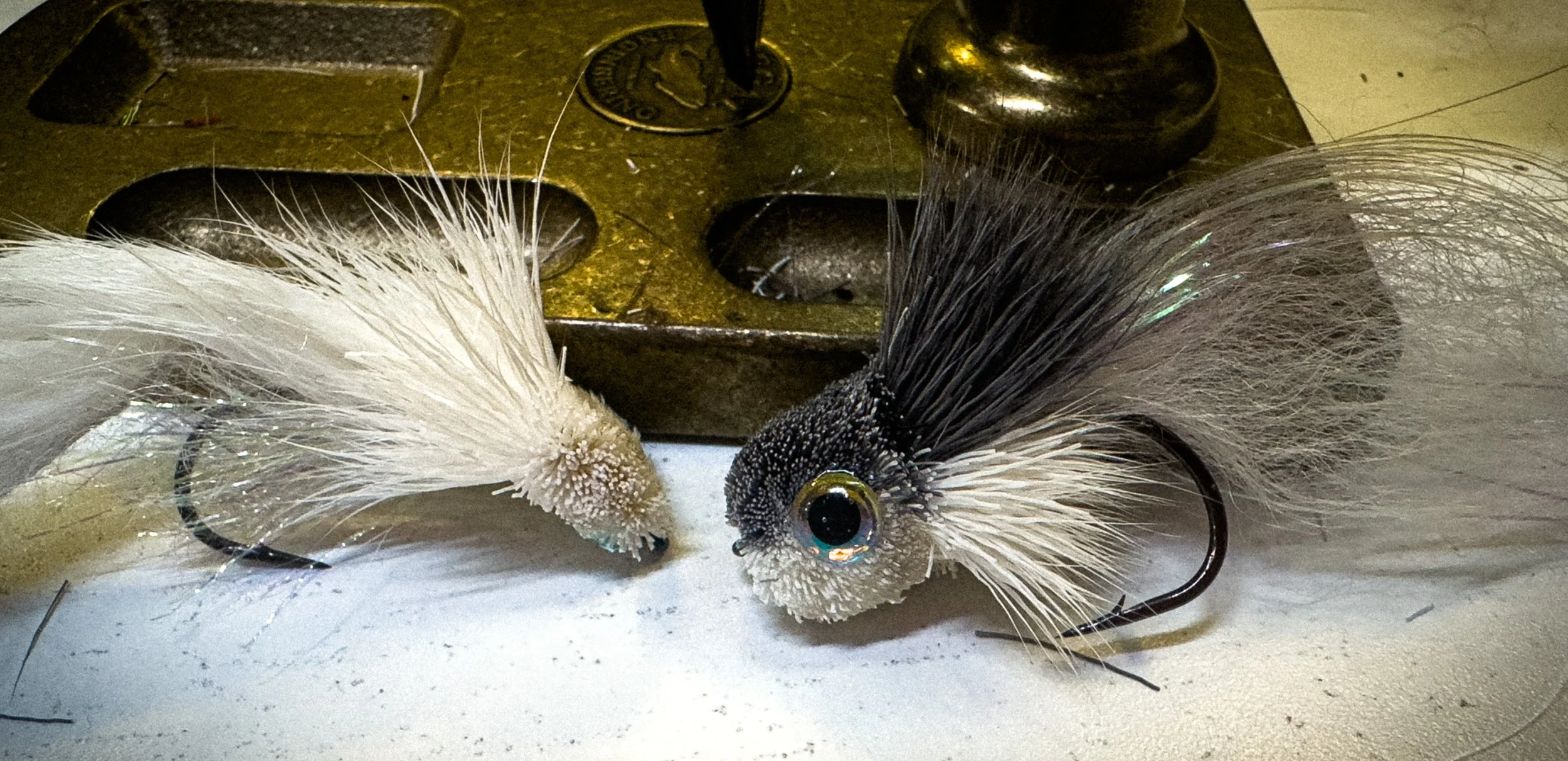
Spun and Stacked deer hair Flies
Fly Design and Material Selection
One of the most fun part of fly-fishing is tying and designing flies. Being a tying instructor, I have clients that have designed and tied a new pattern, however more often than not there is some flaw in the design (i.e. wrong hook, articulated when it is not needed, too big, or too small) or material selection. These are integral parts of fly design; large cunning fish are smart they know how their living food choices move and will shy away from flies that do not move naturally.
Choosing materials for your fly
Now there are several thought processes on this topic. I generally choose materials based on the item at hand, how does the insect or prey move when it is in the water, where in the water column the fly needs to be fished and what is the overall shape of said food source.
Nymphs
When tying nymphs such as stoneflies and mayflies I use stiff materials such as goose biot, turkey biot, and hackle fibers for tails. Mayflies and Stoneflies do not typically wiggle and move/swim. They more often than not are found on the bottom crawling around or getting pushed down by the current, as to anything there are exceptions to this rule some species of Mayflies are swimmers, I still prefer a stiff body on these flies. There are a few nymphs that do swim such as damsel flies and dragonflies, now damsels can be articulated due to their length and the swimming motion they present in the water, however even though dragon flies swim their short length of body is not conducive to articulation. Dragonflies propel themselves through the water with almost jet propulsion (force water out of their bodies).
Streamers
Material selection in streamers can get complicated and takes a little more thought than nymph material selection. Streamers can be tied with soft materials (i.e. Marabou, artic fox, or Icelandic Sheep) or Stiff materials (i.e. bucktail, faux bucktail) this is the tyers choice. I prefer softer materials on many flies simply due to the movement I get with the fly. One thing to take into consideration, when fishing for toothy critters (Muskie, Pike, Dorado) stiff materials hold up to the teeth better than do soft materials like marabou. Recently I was tying some flies heading to Bolivia for Golden Dorado, (aka the fly shredder) with these fish flies only last 1 to 2 fish, but I took that as a challenge to make my flies last 3-4 fish, I went with Flymen Faux bucktail as a main material in these flies. It held up beyond my wildest thoughts. This is typical of synthetic materials however, they are extremely strong and do not absorb water, so they stay light and easy to cast.
Soft materials can be extremely effective in designing streamers, rabbit strips (zonkers), Icelandic sheep, yak hair and cashmere goat are a few examples of soft materials that work well and take abuse fairly well. These materials have amazing movement in the water, swim, and appear to “breathe” when stopped under the water. The main drawback to using soft hair materials is they absorb water and tend to gain weight; rabbit strips are notorious for this (feel like casting a wet sock). However, when using rabbit strips, articulation is rarely needed, due to the side-to-side movement and length of the rabbit strip. Choosing soft lightweight materials can make a fly move in a life like manner; however, the longevity of the fly might be less than flies tied with stiffer materials.
Articulation
When deciding on whether to articulate your fly think about what movement you need out of your fly. Articulation adds side-to-side movement or swimming motion to the fly. Certain flies such as mayflies and stoneflies do not need articulation due to, they do not move in this manner, now damsels and streamer patterns are effective with articulation. Flies do not have to be 6-8 inches long with articulation. Charlie Craven’s Baby Gonga is articulated, but it is tied on size 6 hook and is a total of 3 inches long; in my opinion, flies of this length are very effective, with both cold and warm water species. I do not tie many articulated flies; the ones I do tie are small compared to a lot I have seen lately. I typically fish for bass and trout, which a lot of the time 3-4 inches is the length of the baitfish in the water. There are lot of people that fish for Muskie and Pike, now these fish like meat and a lot of it. Flies for Muskie and Pike can reach 8 -10-inch lengths; multiple articulations are needed to achieve this length.
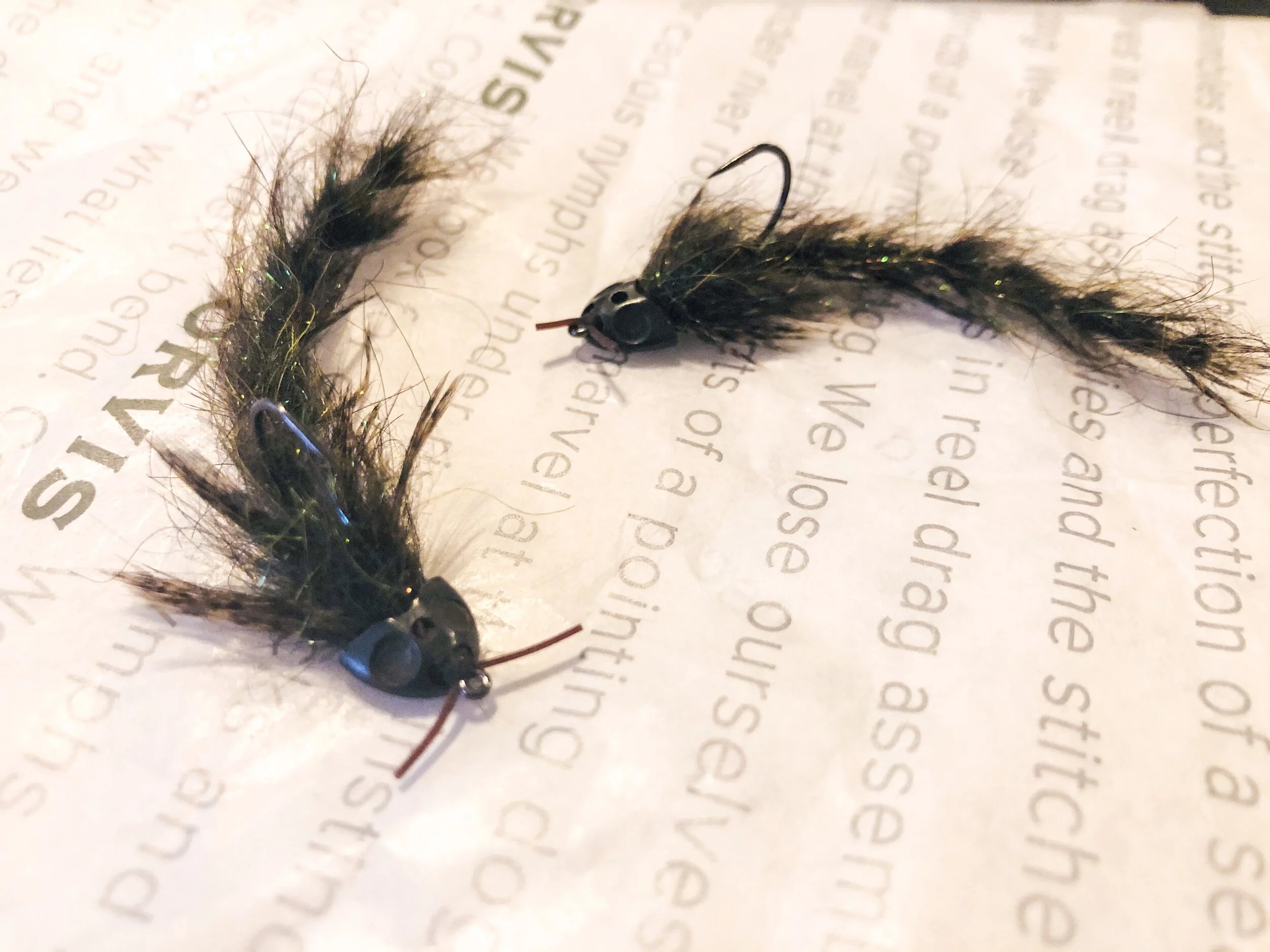
Hellgrammite
Recently I have discovered the micro spines from Flymen, these spines allow you to articulate super small flies like never before. Blanton’s Hellgrammite is tied with these spines and moves identical to a hellgrammite in the water.